




Dental implants have one of the best long-term track records of any restorative treatment in dentistry. Most implants placed today are still working ten years later, and a majority are still working after twenty. That is the reassuring part, worth saying plainly before anything else.
The less-discussed part is that this outcome is not decided on the day of surgery. Survival over decades depends heavily on what happens afterward: the cleaning routine at home, the professional maintenance schedule, and how quickly small problems get noticed and addressed. An implant and the crown or bridge attached to it are also not the same thing, and treating them as identical leads to a lot of unnecessary worry when a restoration needs a repair.
This guide sets out what the current evidence actually supports about implant longevity, what causes peri-implant disease, and what a defensible daily and professional care routine looks like. Where the research is settled, it says so plainly. Where it is not, it says that too.
Thantakit International Dental Center has been involved in implant dentistry in Thailand since 1973, when it became the first dental provider in the country to introduce dental implant surgery. More than five decades later, that long-term perspective is particularly relevant to a subject that does not end on the day an implant is placed: how to keep it healthy for the years and decades that follow.
How Long Do Dental Implants Really Last?
The best available long-term data come from systematic reviews that pool results across many published studies. At ten years, implant-level survival is around 96%, based on a straightforward analysis of the available data. A more cautious analysis, which adjusts for patients who dropped out of these studies before the ten-year mark (a common problem in long-term dental research), puts the figure closer to 93%.
Data now extend to twenty years. Across several prospective studies following implants for two decades or more, survival is roughly 93%, with average bone loss around the implant of a little over one millimeter over that period. Where a cause of failure at twenty years was recorded, biological problems (like peri-implantitis) and mechanical problems (like fracture) occurred in roughly equal numbers.
One honest limitation runs through all of this research: studies following people for ten or twenty years inevitably lose some participants along the way, and the ones who drop out are more likely to be the ones who had problems. Every group that publishes these figures says as much themselves. The true picture is very good, but probably marginally less good than the headline numbers alone suggest.
Survival Rate vs Success Rate
Two different words get used almost interchangeably in implant marketing, and they should not be.
Survival means the implant is still physically present and in function. An implant can survive while still causing problems, such as ongoing inflammation or slow bone loss, as long as it has not actually been removed or become unusable.
Success is a stricter standard. It usually requires the implant to be stable, free of infection, free of pain, and without bone loss beyond what is expected. A “98% success rate” quoted by a clinic is very often actually a survival figure, since survival is easier to measure and reliably comes out higher.
The distinction matters because it changes what a number like “96% at ten years” is actually telling you. It means 96 implants out of 100 were still there, not that all 96 were problem-free the entire time. Some had complications, some needed repairs, some were managed through a period of gum inflammation along the way. That is a normal part of the picture, not a contradiction of it.
The Implant and the Crown Do Not Have the Same Lifespan
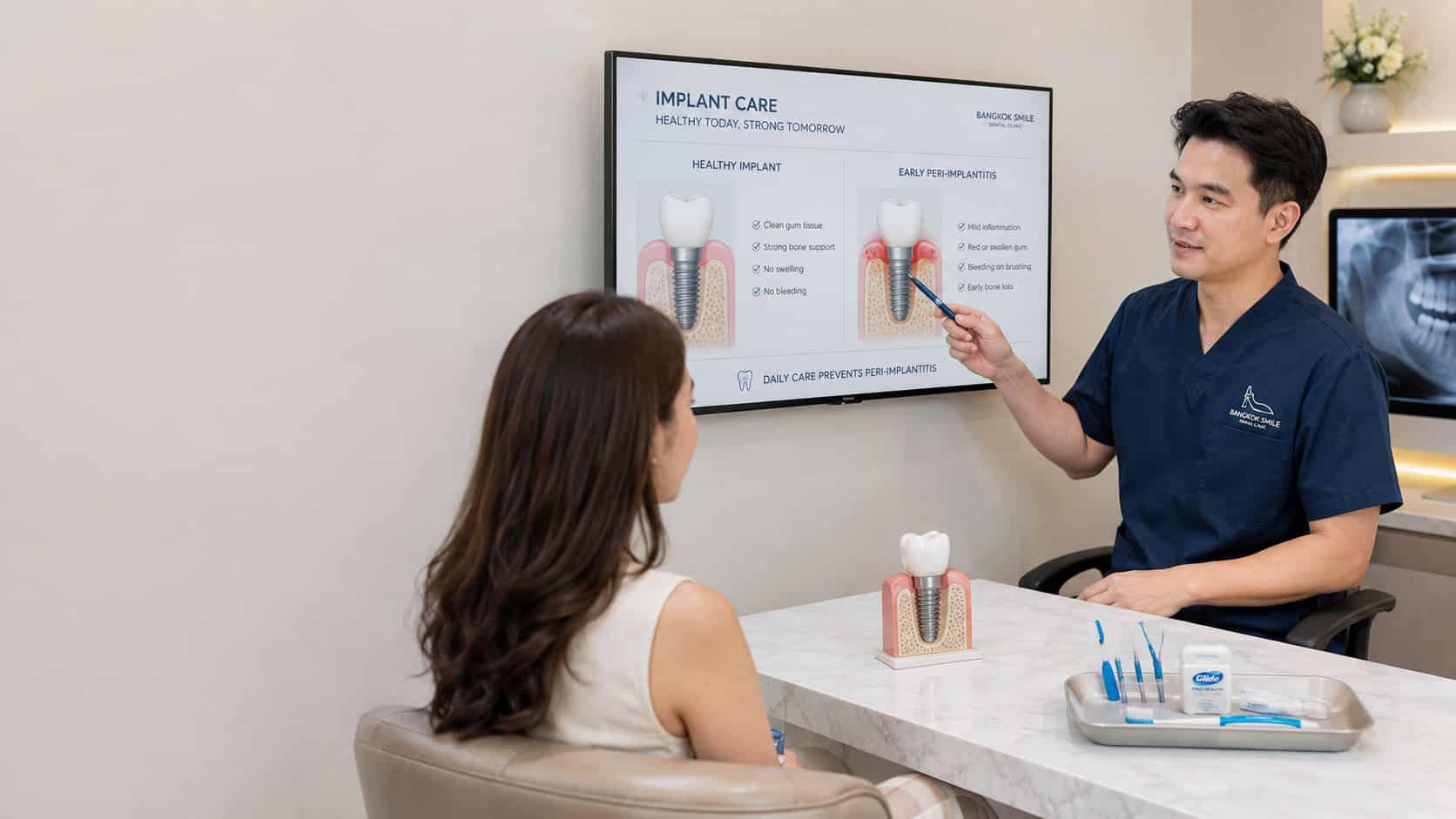
An implant restoration has three parts: the implant itself (the titanium post integrated into the jawbone), the abutment (the connector piece), and the crown, bridge, or full-arch prosthesis on top. These parts age differently, and conflating them is one of the most common sources of unnecessary alarm. The implant fixture is the part designed to last decades, and the survival figures above describe it. The crown or bridge on top is more like a car tire than the engine: a wearing part expected to need attention over time, without that meaning anything has failed underneath.
Looking at implant-supported single crowns specifically, published data over five years show screw loosening in roughly 9% of cases, loss of the crown’s cement retention in about 4%, and chipping or fracture of the outer ceramic in around 3.5%. Meanwhile the implants supporting those same crowns survived at a considerably higher rate, over 97% at five years and still above 95% at ten. The crown is replaced or repaired more often than the implant underneath it is lost.
Implant-supported bridges follow a similar pattern with a somewhat higher overall complication rate, since a bridge has more components and more places something can go slightly wrong: around a third experience some biological or technical complication within five years, most often a small chip in the ceramic. Full-arch restorations are more complex still and less extensively studied, but the same logic applies: more components generally means more opportunities for a repairable issue, not that the implants themselves are failing.
Genuine fracture of the implant post itself is rare, well under one percent over five years, though it becomes meaningfully more likely in people who grind or clench heavily (more on that later).
If your dentist mentions tightening a screw, replacing a chipped crown, or adjusting your bite years after placement, that is routine maintenance of the restoration, not a sign that your implant treatment has gone wrong.
Why Implants Need Different Care From Natural Teeth
Unlike natural tooth enamel, the materials used for dental implant fixtures do not demineralize. An implant therefore cannot develop a cavity, which removes one entire category of dental disease from the picture.
What implants can develop is inflammation of the tissue around them, and that tissue differs from the gum around a natural tooth in a specific way. A natural tooth is anchored by a ligament with its own blood supply and a dense network of fibers that insert directly into the tooth root. An implant has no such ligament. It is held by direct contact with bone, and the surrounding gum is attached by fibers that run mostly parallel to the implant surface rather than inserting into it, with a blood supply that comes largely from above rather than from a ligament below.
This is not just an anatomical curiosity. In controlled studies where researchers deliberately allowed plaque to build up around both teeth and implants in the same volunteers, the gum around the implants reacted more strongly. When the volunteers resumed normal cleaning, inflammation around the natural teeth settled faster; at the implant sites, three weeks of good cleaning was not enough to fully return the tissue to its original healthy state.
That is a more useful way to understand why implant hygiene matters than any claim that implant tissue is simply “weaker.” It is not fragile. It responds to plaque more emphatically and takes longer to calm back down once irritated. Given that implants still show survival above 90% at twenty years, this is a manageable difference, not a reason for alarm, and a good reason the daily habits below are not optional extras.
Peri-Implant Mucositis and Peri-Implantitis
Two related but distinct conditions come up constantly in implant care, and confusing them leads to either unnecessary panic or dangerous complacency.
Peri-implant health
A healthy implant shows no redness, no swelling, no bleeding when the gum is gently checked, and no ongoing bone loss. Some settling of the bone level in the months after placement is normal and expected; it is not itself a sign of disease.
Peri-implant mucositis
Mucositis is inflammation confined to the soft tissue around the implant. The hallmark sign is bleeding when the area is gently probed or cleaned, sometimes with visible redness or puffiness. Crucially, there is no progressive loss of supporting bone at this stage. Strong evidence from both laboratory and human studies points to plaque as the direct cause.
Mucositis is generally considered reversible, since no permanent bone damage has occurred and the process can, in principle, be turned around by removing the plaque driving it. In practice, complete resolution is not guaranteed to happen quickly; as the previous section described, a return to full clinical health can take longer than a few weeks of improved cleaning. This stage is nonetheless where intervention has the best chance of preventing further damage, which is why bleeding gums around an implant deserve attention rather than a shrug.
Peri-implantitis
Peri-implantitis is a step further: inflammation of the same kind, but now accompanied by progressive loss of the bone that anchors the implant. It typically shows up alongside bleeding and, in more advanced cases, pus, deepening pockets, or visible gum recession.
One of the most clinically important facts about peri-implantitis is that it frequently develops with little or no pain. Bone can be quietly lost for a long time before a patient notices anything through sensation alone, which is a central reason routine professional monitoring matters even when everything feels fine.
Among people who already had mucositis, roughly three in ten went on to develop peri-implantitis within five years in one well-documented study. That risk depended heavily on preventive maintenance: around 44% of those without regular maintenance progressed to peri-implantitis, versus about 18% of those who attended regularly. Both figures matter. Maintenance reduces the risk substantially; it does not eliminate it.
How common are these conditions?
Pooling data from more than a hundred studies and over 13,000 patients, roughly 46% of implant patients show some degree of mucositis and about 21% show peri-implantitis, measured at the patient level (at least one implant affected). Stricter, more recent diagnostic criteria tend to report somewhat higher figures for both, and prevalence generally rises the longer implants have been in function.
These are population averages, not a prediction for any individual. Risk is also not evenly distributed: among non-smokers specifically, only about 5% of implants (not patients) showed peri-implantitis in one large analysis, versus roughly 18% across implants generally.
| Peri-implant health | Peri-implant mucositis | Peri-implantitis | |
|---|---|---|---|
| Bleeding on gentle probing | No | Yes | Yes, often with pus |
| Redness or swelling | No | Often | Often |
| Bone loss around the implant | No (beyond normal early settling) | No | Yes, progressive |
| Reversible with better cleaning | Not applicable | Usually, though full resolution can take time | Bone loss is generally not reversible; the process can be controlled |
| Approximate patient-level prevalence | Majority of patients | About 46% | About 21% |
Your Daily Dental Implant Care Routine
Brushing
Brush twice a day with a soft-bristled brush, manual or electric. Both are entirely suitable for implants, and neither has been shown in implant-specific research to make an implant last longer than the other.
In general dental populations, studies comparing brush types have found a small, statistically real advantage for powered oscillating-rotating brushes on plaque and gum inflammation. That advantage is modest in absolute terms, and a study in adults over 55 found no meaningful difference between powered and manual brushes at all. No trial has isolated implants specifically to test whether one brush type produces better long-term outcomes around them. In practice, the brush you will actually use twice a day, correctly, matters more than which category it falls into.
Cleaning Between and Around Implants
Cleaning between and around implants once a day is where the evidence gets genuinely interesting, because it does not point to a single correct answer.
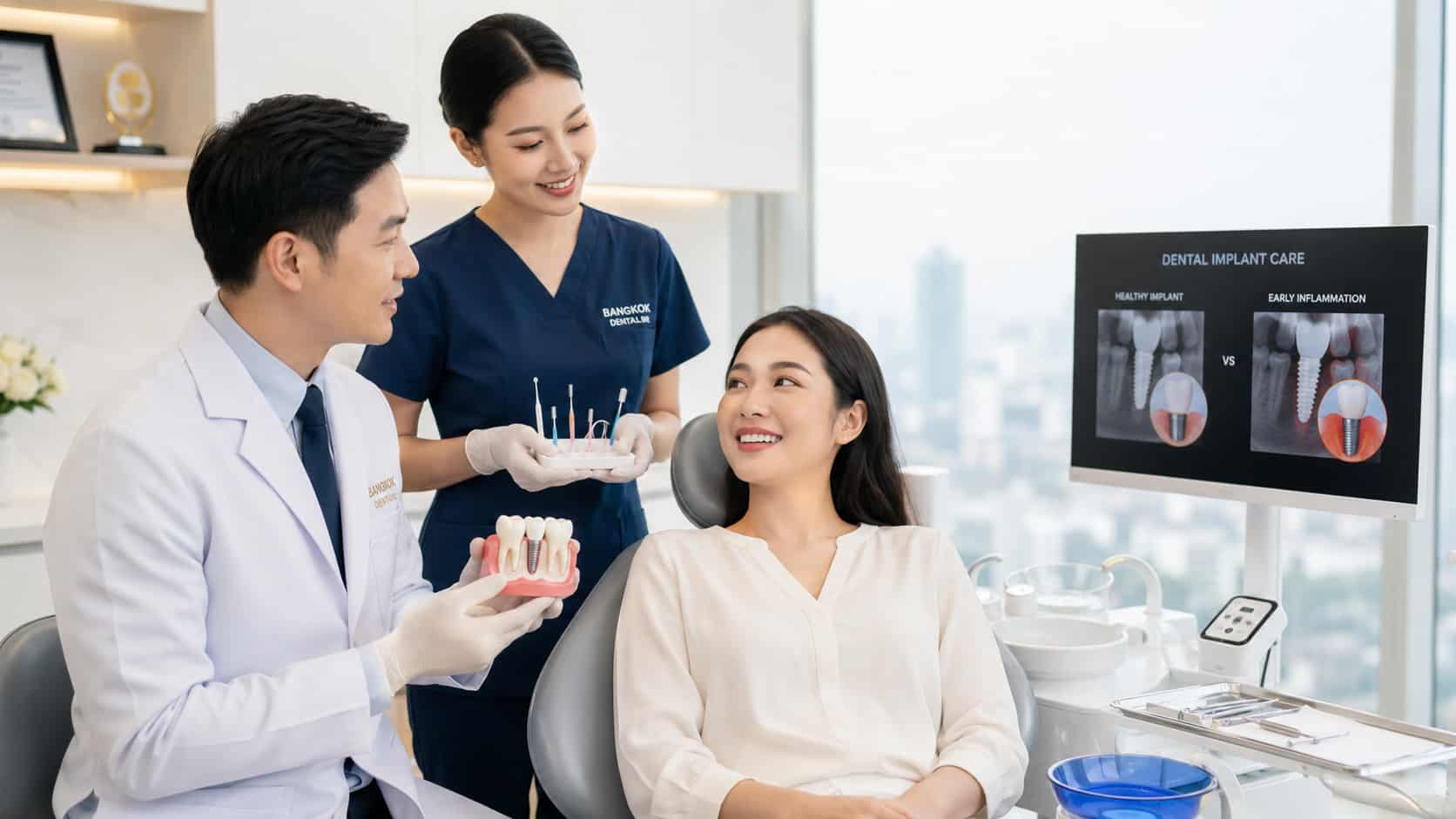
Options include traditional floss, interdental brushes (small bottle-brush-shaped picks that fit between teeth and implants), floss threaders for pulling floss under a bridge, and water flossers (oral irrigators), which use a pressurized stream of water to dislodge plaque and debris.
Several small studies have compared these directly around implants. Some found water flossers or interdental brushes produced a somewhat larger reduction in bleeding than floss over a few weeks. When these studies are pooled together formally, though, the differences between tools stop being statistically significant, and adding any of these devices to ordinary brushing did not produce a clear improvement over brushing alone. The trend favors interdental brushes and water flossers; the certainty behind it is limited. No study has shown that any of these tools prevents peri-implantitis or extends how long an implant lasts, only that they reduce bleeding and plaque over a period of weeks.
The most defensible instruction is this: clean between and around your implants every day, using whatever tool physically reaches the areas that need it and that you will genuinely use consistently. Tight, natural-tooth-like contacts often suit floss well; wider gaps are often easier with an interdental brush; a water flosser suits people who find brushes or floss awkward. None has been proven superior for every patient, and your dentist or hygienist is the right person to show you what fits your mouth.
What Toothpaste Should You Use?
Ordinary fluoride toothpaste is appropriate for implants. There is no clinical evidence linking toothpaste abrasivity, whitening formulations, or fluoride content to implant failure, bone loss, or peri-implantitis in actual patients.
You may see claims online that abrasive or whitening toothpaste scratches implant surfaces or damages titanium. These trace back to laboratory studies measuring microscopic surface texture changes under repeated brushing simulations, not to any study of what actually happens in people’s mouths over time. A laboratory surface finding is not a clinical outcome, and turning one into the other is a common overreach in implant care content. If you have a toothpaste preference already, there is no evidence-based reason to change it because of your implants.
Do You Need Mouthwash?
Mechanical cleaning, brushing and interdental cleaning, is the foundation of implant care. Mouthwash is an addition, not a substitute, and healthy implants do not require it routinely.
Antiseptic rinses containing chlorhexidine have well-documented short-term value in reducing plaque and gum inflammation, and a dentist may recommend one for a limited period after surgery or while treating an active problem. Guidelines describe this kind of use as something that may be considered for a defined purpose, not as a daily habit to continue indefinitely. Long-term use is associated with reversible staining of teeth and restorations, more calculus (hardened plaque) buildup, and a temporary altered sense of taste, which is why it is prescribed in short courses for a reason rather than used as a permanent daily rinse.
Fluoride mouthwash protects the enamel of any remaining natural teeth from decay. It has no particular protective effect on the implant itself, since implants cannot decay regardless.
Cleaning Implant Bridges and Full-Arch Restorations
Bridges and full-arch restorations (including designs sometimes marketed as All-on-4 or All-on-6) raise the difficulty of home care because there is a surface that cannot be seen or reached the way a single crown can: the underside of the restoration, where it meets the gum.
The core principle is access, not a specific product. Plaque and food debris accumulate at that hidden tissue-facing surface just as readily as anywhere else, and a normal toothbrush usually cannot reach it directly. Cleaning underneath the restoration, not just around its visible outer surface, is what actually protects the implants supporting it.
There is no single combination of tools proven to work best for every full-arch patient, and it would be a disservice to prescribe one, because restorations vary enormously in shape and design. Hygiene instruction should be tailored to the individual restoration: your dentist or hygienist should show you, on your own bridge or prosthesis, exactly where the problem areas are and which tool actually reaches them. Many patients end up combining a water flosser aimed at the tissue-facing surface with floss or superfloss guided underneath by a threader and a small brush for the transition zone, but the right combination is a matter of individual fit, not a universal formula.
If a restoration genuinely cannot be kept clean at home no matter what technique is used, that is a solvable problem with the restoration rather than something to simply live with. A dentist may occasionally need to remove, modify, or gain additional access to a full-arch prosthesis when proper examination, cleaning, repair, or treatment cannot otherwise be performed. This is not a routine requirement for every full-arch patient; it depends on how the individual case is progressing and what the clinician finds at review.
What Professional Implant Maintenance Actually Involves
Implant maintenance is a lifelong commitment, which sounds more burdensome than it usually is in practice. A maintenance visit typically includes an assessment of plaque and bleeding, gentle probing for changes in pocket depth, an examination of the surrounding soft tissue, a check of the restoration for looseness or wear, and a review of the bite. Radiographs are added when there is a clinical reason.
How Often Should Dental Implants Be Checked?
“Every six months” has become a default assumption online, but it is not what current guidance supports for every patient. People with healthy implants should receive regular supportive care, with the interval set individually based on risk rather than fixed at one number for everyone.
Several factors reasonably shorten the interval: a history of gum disease, smoking, poorly controlled diabetes, difficulty maintaining good plaque control, a full-arch or otherwise complex restoration, and any previous episode of peri-implant disease. Someone with none of these factors and consistently excellent hygiene may reasonably be seen less often than someone with several of them.
One specific number is worth knowing, and it applies to a specific circumstance rather than to everyone. After treatment for peri-implantitis, guidelines suggest more frequent supportive care during recovery, roughly every three to four months for the first year, before settling into a longer, individualized interval once things have stabilized. That schedule is for people recovering from treatment, not a general rule from day one.
Why Dentists Probe Around Implants
A persistent myth holds that implants should never be probed, on the theory that it might damage the seal between the gum and the implant. This is not supported by current evidence. Gentle probing, using a suitable periodontal probe with light pressure, is a recommended, standard part of implant monitoring.
Probing does briefly disrupt the tissue’s attachment to the implant surface, but in the animal studies that have examined this directly, that attachment reformed within about five days. The actual caution in the research literature is different: a single probing depth reading, taken in isolation, does not reliably diagnose disease. Depth and bleeding need to be read together with the bone level on an X-ray and against your own earlier readings, since what counts as a normal depth varies by tissue thickness and implant position from person to person. That is why a baseline measurement matters: ideally, six points around each implant are recorded within the first few months after your restoration is fitted, and those numbers become the reference for everything measured afterward. A depth of 5 or 6 millimeters can be entirely healthy for one person and a warning sign for another, depending on where that person started.
X-Rays
A baseline X-ray is typically taken once the bone around the implant has finished its initial, expected settling process. This becomes the reference image for comparison later. Beyond that baseline, further X-rays are recommended when there is a clinical reason, such as increasing pocket depth combined with bleeding, rather than on a routine annual schedule regardless of how things look clinically. This is a deliberately conservative, radiation-conscious approach: there is no fixed requirement for yearly implant X-rays in current guidance. If your dentist is not taking an X-ray at every single visit, that generally reflects sound practice rather than an oversight.
Warning Signs You Should Not Ignore
Peri-implant disease can progress quietly. Do not wait for pain: it is often one of the last symptoms to appear, and by the time an implant is genuinely painful or shows any sign of movement, the situation has usually already become serious.
Signs worth paying attention to and mentioning to your dentist include:
- Bleeding when you brush or clean around the implant, the earliest and most reliable sign that something needs attention
- Gum that looks red, puffy, or has visibly receded, exposing more of the implant or crown than before
- A persistent bad taste or odor that seems to come from one particular spot
- Pus or discharge around the implant
- New food trapping in an area where it did not used to happen
- A change in how your bite feels, or in how the restoration sits
- Any sense that the implant or restoration is loose
- Pain, or any sense that the implant itself is moving, both late and serious signs that warrant prompt attention
One additional point worth knowing: people who smoke or vape tend to show less bleeding when probed, even when their underlying bone loss is comparable to or worse than that of non-users. The absence of bleeding is a less reassuring sign for someone who smokes or vapes.
Loose Crown vs Loose Implant
These two situations sound similar to a patient but are quite different clinically, and telling them apart usually requires an examination rather than guesswork at home.
| Loose crown, screw, or abutment | Loose implant (fixture) | |
|---|---|---|
| What has happened | A mechanical part above the gum has come loose or a screw has worked free | The implant itself has lost its bond with the bone |
| How common | A recognized, fairly common maintenance issue | Uncommon, and usually a late sign of advanced disease or excess biting force |
| Typical fix | Retightening, recementing, or replacing the affected component | Usually requires removal of the implant |
| Urgency | Should be assessed promptly, since a loose part left under chewing forces can damage what is underneath it | Should be assessed promptly as a more serious finding |
A healthy, properly integrated implant does not move at all under normal function, unlike a natural tooth, which can show a very slight degree of give. Genuine movement of the implant itself is a significant finding. A loose crown or screw, by contrast, is a mechanical repair issue and does not automatically mean the implant has failed. That said, do not assume a loose restoration is trivial or always quick to fix; some repairs are straightforward, others involve sourcing specific components or addressing a fractured part, and only an examination will tell you which situation you are in. Either way, arrange to be seen promptly.
What Raises the Risk of Implant Problems?
Some factors matter a great deal for implant health; others turn up in research with a smaller or less certain effect. Presenting them all with equal weight would be misleading, so they are ranked here roughly by strength of evidence.
Smoking
Smoking is one of the most consistently documented risk factors in this field. Implants placed in smokers fail at roughly double the rate of those in non-smokers, with measurably more bone loss (on the order of half a millimeter more on average) and roughly double the odds of peri-implantitis specifically. Heavier smoking is associated with worse outcomes than lighter smoking, and this is not just a healing-period risk: the added risk shows no clear sign of fading the longer an implant has been in place, and appears to persist for as long as someone continues to smoke.
Vaping
Vaping needs to be considered separately from cigarette smoking rather than assumed to carry identical risk. Studies comparing e-cigarette users with non-smokers have found worse peri-implant measures in vapers: more bone loss, deeper probing depths, more plaque. In a broader comparison across nicotine and tobacco products, e-cigarette users generally showed less bone loss than cigarette or waterpipe smokers, though still more than non-users.
Every study on this topic so far is a snapshot rather than a long-term follow-up, and none has tracked whether vapers actually lose implants more often over time. The evidence points toward vaping being unfavorable for peri-implant tissue without yet establishing how that translates into long-term survival. It should not be assumed safe, and it should not be equated with the far more extensively documented risks of cigarette smoking. One useful point: like smokers, vapers tend to show less bleeding on probing despite worse underlying findings, which can make an absence of bleeding a misleading reassurance.
History of Gum Disease
A previous history of periodontal (gum) disease is one of the strongest, most consistent risk indicators for peri-implant problems. People with a history of periodontitis have a significantly higher risk of eventually losing an implant than people who never had gum disease, with an even more pronounced increase in the risk of peri-implantitis specifically. This does not mean implants are off the table for someone with a periodontal history; it means maintenance and hygiene matter more, not less, for this group, and it is a good reason to bring active gum disease under control before implants are placed and to stay consistent with supportive care afterward.
Diabetes
The relationship between diabetes and implant outcomes is genuinely nuanced, and the evidence does not support a single cutoff number that determines whether someone can safely have implants. Well-controlled type 2 diabetes does not appear to be a meaningful risk indicator; outcomes are broadly comparable to those in people without diabetes. Poorly controlled diabetes, and even prediabetes, are associated with measurably more bone loss, and the data show a graded relationship: the higher a person’s average blood sugar (HbA1c), the more bone loss tends to appear. Diabetes does not automatically rule out implant treatment, and no single HbA1c number should be treated as an automatic barrier. Glycemic control is a genuinely relevant factor worth discussing with both your physician and your dentist, before treatment and on an ongoing basis afterward.
Grinding and Clenching
Bruxism (habitual grinding or clenching, often during sleep) is primarily a mechanical risk factor rather than an infectious one; it is not a major driver of the plaque-related inflammation that causes peri-implantitis. What it does substantially raise is the risk of mechanical complications: loosened screws, fractured components, chipped or cracked ceramic. Implants in people with probable bruxism also show a meaningfully higher overall failure rate, likely reflecting cumulative mechanical stress.
Night guards are commonly recommended for implant patients who grind. The reasoning rests on how they are understood to redistribute biting forces, and on clinical experience, rather than on large trials directly proving a night guard extends how long an implant lasts. It remains a sensible precaution, just one supported more by mechanical reasoning than by outcome trials.
Other Factors
Several other factors turn up in the research with weaker or less settled evidence, and giving them the same weight as smoking, gum disease history, or diabetes would overstate what is actually known.
Obesity shows an association with peri-implant mucositis in pooled data. For peri-implantitis specifically, an expert panel reviewing this evidence in 2025 did not reach agreement, with opinions notably split. This is a genuinely unsettled area, not an established risk factor.
Alcohol and age have each shown up as associated factors in some analyses, but the evidence for either as an independent, reliable predictor is limited. On age, what seems to matter is not years lived but practical factors that can accompany aging, such as reduced hand dexterity, vision changes, or a dry mouth, which can make daily cleaning harder. Implants do not deteriorate simply because a patient gets older.
Osteoporosis is reassuring territory: multiple analyses have found it does not meaningfully compromise implant survival on its own.
Keratinized tissue (a band of firmer gum that surrounds some but not all implants) is associated with somewhat less recession and easier plaque control where present, but current evidence has not established a clear effect on survival. It is a comfort factor more than a proven survival factor.
If Peri-Implantitis Develops
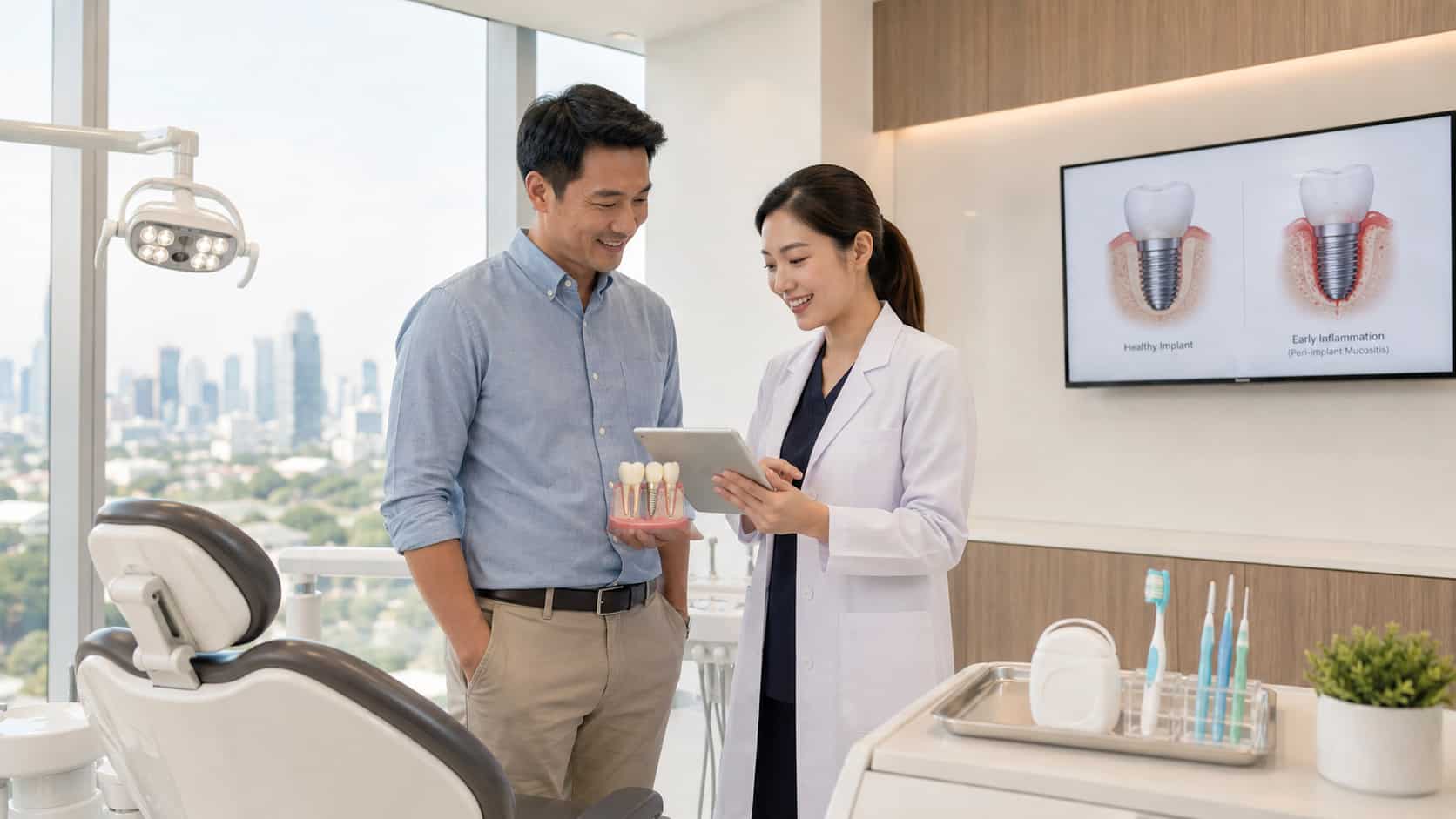
Being told you have peri-implantitis is understandably unsettling, but it does not mean the situation is hopeless or that the implant is automatically lost. Treatment follows a logical sequence, moving from less invasive steps toward more involved ones only as needed: improving plaque control and addressing relevant risk factors such as smoking or a hard-to-clean restoration, then professional non-surgical cleaning of the implant surface below the gum line with specialized instruments, then reassessment after a period of weeks. If inflammation and pocket depths have not sufficiently improved, surgical treatment becomes the next step, opening the gum tissue for direct access to clean the implant surface, sometimes combined with reshaping the bone or adding bone-supporting material. Whatever path treatment takes, structured, more frequent supportive care afterward is central to keeping the result stable.
This article deliberately does not detail specific surgical techniques, decontamination methods, or medications, since those are clinical decisions made case by case. Current guidelines are fairly conservative about several commonly marketed add-ons, including certain lasers and locally applied antimicrobials, for which the evidence has not been strong enough to justify routine use. If a clinic proposes one as an add-on, it is reasonable to ask what evidence supports it for your situation.
Can Peri-Implantitis Be Cured?
“Controlled,” “stabilized,” or “arrested” are more accurate descriptions than “cured,” and this is a genuine distinction, not just different wording. Bone that has already been lost around an implant generally does not come back completely, even with treatment. Some surgical techniques aim to regenerate a portion of it using grafting materials and can produce measurable gains, but predictable, complete restoration of what was lost is not something current evidence supports promising. The realistic goal is to stop the disease process and keep it from coming back, not to fully reverse existing damage.
In long-term studies following treated patients for five years or more, the disease was successfully brought under control in roughly six cases out of ten, with progressive bone loss halted in a somewhat higher proportion. Retreatment is not unusual. These figures come largely from specialist settings with patients who kept up with structured follow-up care, likely a more favorable picture than average real-world outcomes.
Does the Implant Have to Be Removed?
No. A diagnosis of peri-implantitis does not automatically mean the implant will be removed. Treatment generally aims to keep an implant that remains clinically sound enough to be worth keeping, and many cases are managed successfully without ever reaching that point.
Removal becomes a realistic consideration in more specific circumstances: if the implant has become mobile, if it has fractured, if the surrounding disease cannot be brought under control despite appropriate treatment, or if repeated treatment attempts have not succeeded. These are clinical judgments made case by case, not a checklist a patient should try to apply to themselves.
Looking After Dental Implants as You Get Older
Age itself is not clearly established as an independent cause of implant problems. What changes for some people as they get older are practical factors that make daily care harder to carry out: reduced hand dexterity from arthritis, vision changes that make it harder to see plaque, memory changes that affect routine, a persistently dry mouth (often a side effect of common medications), or increasing dependence on a caregiver for daily hygiene.
Sensible adaptations exist for many of these challenges: a powered brush can reduce the fine motor demands of effective brushing, a water flosser can simplify interdental cleaning for someone who struggles with manual dexterity, and alcohol-free rinses are gentler for a dry mouth. These are reasonable, practical adjustments rather than treatments proven in trials to specifically extend implant life.
No specific diet, food, or supplement has been shown to extend the life of an implant once it has successfully healed and integrated. General nutritional advice supporting bone and overall health is worthwhile in its own right, but it is not an implant-specific intervention. Avoiding very hard or unusually sticky foods protects the crown or bridge from mechanical damage, which is separate from the biological health of the implant itself.
If You Had Your Dental Implants Abroad
Routine implant maintenance should normally be carried out by a suitable dentist wherever you actually live. Cleaning, monitoring, gentle probing, and clinically indicated follow-up X-rays are care that a competent general or implant dentist can provide, regardless of who originally placed the implant.
What is genuinely worth doing, wherever your implants were placed, is holding onto your treatment documentation: the implant manufacturer and system, dimensions where available, connection type, abutment and prosthesis details, treatment dates, and copies of any relevant X-rays or clinical notes. The reason is practical: replacement components such as abutments and screws are specific to each manufacturer’s system, and a dentist unfamiliar with an unusual or older system can genuinely struggle to source compatible parts without knowing exactly what was placed.
You may see the term “implant passport” used informally for this kind of record. The term is not standardized, and what it includes varies by location and clinic. There is no general legal requirement for patients to retain this information, though keeping it is strongly advisable as a matter of practical continuity of care rather than any formal obligation.
A few situations are genuinely better handled by returning to, or at least contacting, the clinic that originally placed your implants: identifying an unusual component that a local dentist cannot source, questions related to a treatment guarantee, and complications that trace directly back to the original surgical procedure. Everyday monitoring, cleaning, and standard maintenance are not among them.
If you had implant treatment at Thantakit and later need details about your implant system, copies of your treatment records, or guidance coordinating care with a dentist near you, that information can be requested from the clinic. For day-to-day maintenance, a dentist where you live is the right person to see routinely.
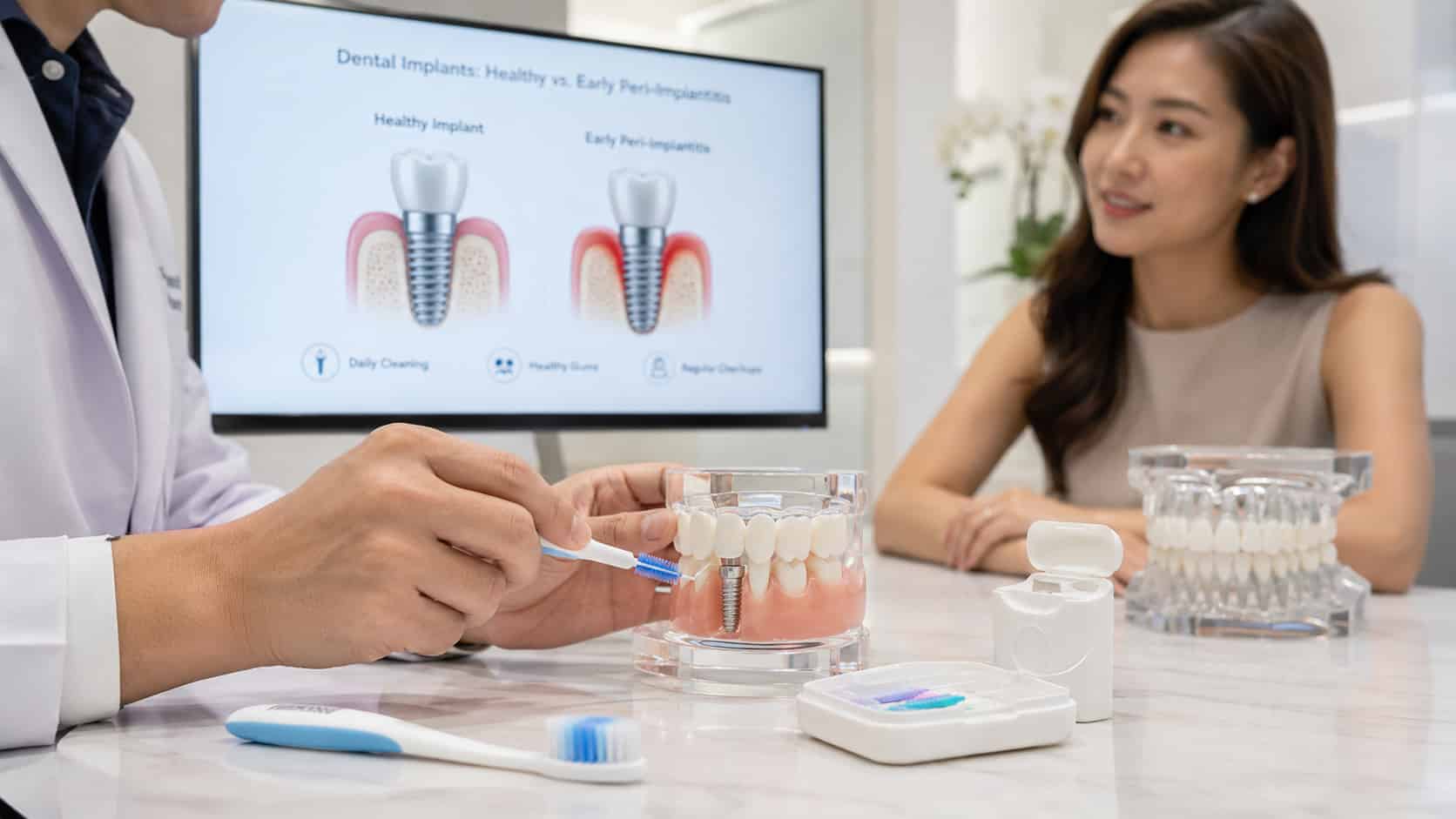
Common Dental Implant Care Myths
“Dental implants last forever.” Long-term survival is genuinely excellent, but no restoration, implant or natural tooth, comes with a lifetime guarantee. Long-term care meaningfully affects the outcome.
“Implants can’t get infected because they’re artificial.” The implant material itself cannot decay or become infected, but the living tissue surrounding it absolutely can become inflamed and infected, which is exactly what peri-implant disease is.
“If it doesn’t hurt, it’s healthy.” Peri-implant disease frequently progresses with little or no pain. Bleeding while cleaning is a far more reliable early signal.
“Implants should never be probed.” Gentle probing is a standard, recommended part of monitoring implant health, not something that damages a healthy implant.
“You should never floss around an implant.” Interdental cleaning, including flossing, is recommended around implants. Some tools may work somewhat better than others for a given restoration, but flossing itself is not prohibited.
“Everyone needs an implant check-up every six months.” The right interval is based on individual risk, not a fixed universal rule. Some people reasonably need more frequent visits; others need fewer.
“A loose crown means the implant has failed.” Far more often, a loose crown, abutment, or screw is a repairable mechanical issue that does not affect the implant fixture itself.
“A water flosser prevents peri-implantitis.” Water flossers can reduce plaque and bleeding, which is genuinely useful, but no study has shown that using one prevents peri-implantitis or extends how long an implant lasts.
Frequently Asked Questions
Brush twice a day with a soft brush and clean between and around the implants once a day with a tool that fits your restoration. This routine, done consistently, is one of the most important things under your control.
Yes, flossing is a recommended part of implant care. Interdental brushes or water flossers may be easier to use effectively for restorations with wider gaps, but flossing itself is not discouraged or unsafe.
Yes. Studies in general populations show a modest plaque advantage for some powered brushes, but no implant-specific research shows one brush type makes implants last longer than another.
Yes. There is no evidence that water flossers harm implants, and small studies show they can reduce bleeding and plaque. They have not been shown to prevent peri-implantitis on their own, so they work best alongside, not instead of, daily brushing.
Ordinary fluoride toothpaste is fine. Concerns about abrasive or whitening toothpaste harming implants come from laboratory surface studies, not evidence of actual clinical harm.
No. A healthy implant should not bleed when gently cleaned or probed. Bleeding is the earliest reliable sign of inflammation and is worth mentioning to your dentist.
Often not, especially in its earlier stages. Peri-implant disease can progress with little or no pain, which is why bleeding and other visible changes matter more than how something feels.
Many do. Long-term studies following implants for twenty years report survival around 93%, and a well-maintained implant can reasonably be expected to keep functioning beyond that. No implant comes with a guarantee.
Yes. Routine monitoring, cleaning, and standard maintenance do not require the dentist who originally placed the implant. Keeping a record of your implant system and treatment dates helps if a specific replacement part is ever needed.
It is usually a mechanical issue, a loose screw, worn cement, or similar, rather than a sign the implant itself has failed. Arrange to be seen promptly, since a loose part left under normal chewing forces can cause further damage.
Dental Implant Care Checklist
Every day
- Brush twice daily with a soft brush.
- Use ordinary fluoride toothpaste.
- Clean around and between each implant once daily, with a tool that actually fits your restoration.
- If you have a bridge or full-arch restoration, clean underneath it, not just around the visible surface.
- Mouthwash is optional and does not replace mechanical cleaning.
Watch for
- Bleeding when cleaning
- Redness, swelling, or recession
- A persistent, localized bad taste or smell
- Pus
- New food trapping
- A change in your bite
- Any sense of looseness
- Pain or movement (late, serious signs)
Professional care
- Keep to the recall interval your dentist sets for you individually.
- Expect gentle probing at each check-up; it is a normal and useful part of monitoring.
- Expect a baseline X-ray once your bone has settled, then further X-rays only when there is a clinical reason.
- Tell your dentist about any changes in smoking or vaping habits, diabetes control, or new grinding or clenching.
- If you have been treated for peri-implantitis, expect closer follow-up, typically every three to four months, during the first year afterward.
The Bottom Line
Dental implants have an excellent long-term track record, and the implant fixture itself is genuinely built to last for decades. What determines whether an individual implant reaches that potential is mostly what happens after it is placed: consistent daily cleaning, professional maintenance set to your actual risk level rather than a generic calendar, and prompt attention when bleeding or other changes appear. Problems caught early, particularly at the mucositis stage, are far easier to manage than problems allowed to progress silently.
None of this requires a special diet, a specific brand of toothbrush, or a rigid routine involving five different tools. It requires consistency with the basics and a working relationship with a dentist who knows your history.
Protect Your Dental Implants for the Long Term
Thantakit International Dental Center introduced dental implant surgery to Thailand in 1973, and the center’s experience extends well beyond the surgery itself, into the long-term maintenance and management of implants over the years and decades that follow.
If you already have dental implants and have noticed bleeding, looseness, gum changes, discomfort, or anything else that concerns you, Thantakit can assess what is happening and advise on next steps. If you are considering dental implants and would like to discuss your options in Bangkok, the team can arrange a consultation to review your case.
Patients living overseas do not need to return to Bangkok for routine implant maintenance. Routine checks and cleaning can normally be performed by an appropriate dentist where you live. Thantakit can help when an existing implant needs assessment, when you are considering new treatment, when treatment records or implant-system details are needed, when an unusual component needs identifying, when coordination with your local dentist would help, or when a question relates specifically to treatment originally performed at Thantakit.
Contact Thantakit International Dental Center to arrange an implant consultation or assessment.
Sources and Further Reading
This article was developed using current clinical guidelines, consensus reports and systematic reviews, including:
- European Federation of Periodontology. Prevention and treatment of peri-implant diseases: the EFP S3 level clinical practice guideline. Journal of Clinical Periodontology, 2023.
- Wang HL, et al. AO/AAP consensus on prevention and management of peri-implant diseases and conditions: summary report. Journal of Periodontology, 2025.
- Berglundh T, et al. Peri-implant diseases and conditions: consensus report of Workgroup 4 of the 2017 World Workshop. Journal of Clinical Periodontology, 2018.
- Howe MS, Keys W, Richards D. Long-term (10-year) dental implant survival: a systematic review and sensitivity meta-analysis. Journal of Dentistry, 2019.
- Dental implant survival and marginal bone loss after a minimum of 20 years: systematic review and meta-analysis of prospective studies. Japanese Dental Science Review, 2026.
- Galarraga-Vinueza ME, et al. Prevalence, incidence, systemic, behavioral and patient-related risk factors and indicators for peri-implant diseases. Journal of Periodontology, 2025.
- Mustapha AD, Salame Z, Chrcanovic BR. Smoking and dental implants: a systematic review and meta-analysis. Medicina, 2021.
- Annunziata M, et al. Effectiveness of implant therapy in patients with and without a history of periodontitis: a systematic review with meta-analysis. Journal of Periodontal Research, 2025.
- Bencze B, et al. Prediabetes and poorly controlled type-2 diabetes as risk indicators for peri-implant diseases: a systematic review and meta-analysis. Journal of Dentistry, 2024.
- Monje A, et al. Long-term surgical treatment outcomes of peri-implantitis. Periodontology 2000, 2025.
- Optimizing implant hygiene: the added value of interproximal cleaning devices around implant-supported restorations. International Journal of Implant Dentistry, 2025.