




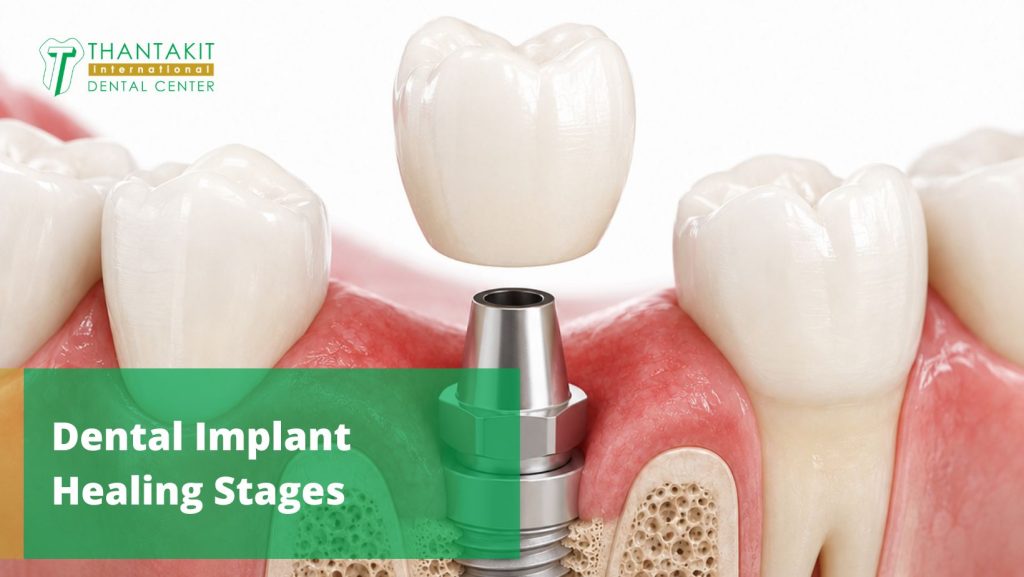
Many patients notice that a new dental implant feels stable and comfortable within days or weeks of surgery, long before it has actually bonded with the jawbone. That gap between feeling fine and being biologically integrated is one of the most misunderstood parts of implant treatment. Osseointegration, the gradual process by which living bone grows into direct contact with the implant surface, usually unfolds over several months, and the timeline is genuinely individual.
This article walks through what happens in the bone and gum at each stage of healing, why comfort is not the same as integration, and how to tell normal healing from signs that need prompt attention. It is written with international patients in mind, including those who may need to travel home before treatment is finished.
Page Contents
What Is Osseointegration?
Osseointegration was first described by Brånemark and colleagues as a direct structural and functional connection between living bone and the surface of a load-bearing implant. In plain terms, bone cells grow directly against the implant and anchor it biologically rather than only mechanically. That biological bond is what lets an implant handle years of chewing force.
Two kinds of stability are involved. Primary stability is the mechanical grip between the implant and the surrounding bone, created during surgery and present the instant the implant is placed. Secondary, or biological, stability develops afterward as bone-forming cells lay down new bone onto the implant surface over weeks to months. An implant does not fuse to the jaw in a single step. It is held first by mechanical grip and then, gradually, by a biological bond that grows stronger over time.
Dental Implant Healing Timeline at a Glance
The stages below overlap and are approximate. They are a general guide rather than fixed deadlines, since healing continues gradually rather than completing on any single date.
| Approximate stage | What is generally happening |
| First 24 to 72 hours | Blood clot forms, early inflammation begins, and primary stability provides the implant’s initial mechanical support. |
| First week | The clot organizes, the gum starts to close, and gum soreness and swelling usually begin to ease. |
| Weeks 2 to 4 | Early, immature bone begins to form. Mechanical stability may dip as the first bone contact is remodeled and biological stability starts to build. |
| Month 2 | Bone continues to mature and biological stability becomes increasingly dominant. |
| Around Month 3 | A common point to reassess many lower-jaw implants, though not a fixed date for restoration. |
| Months 4 to 6 and beyond | Longer integration is common for upper-jaw sites, softer bone, grafted areas, and complex cases. |
| Restoration stage | The crown is placed once adequate implant stability is confirmed. |
Day of Surgery: Placement and Initial Stability
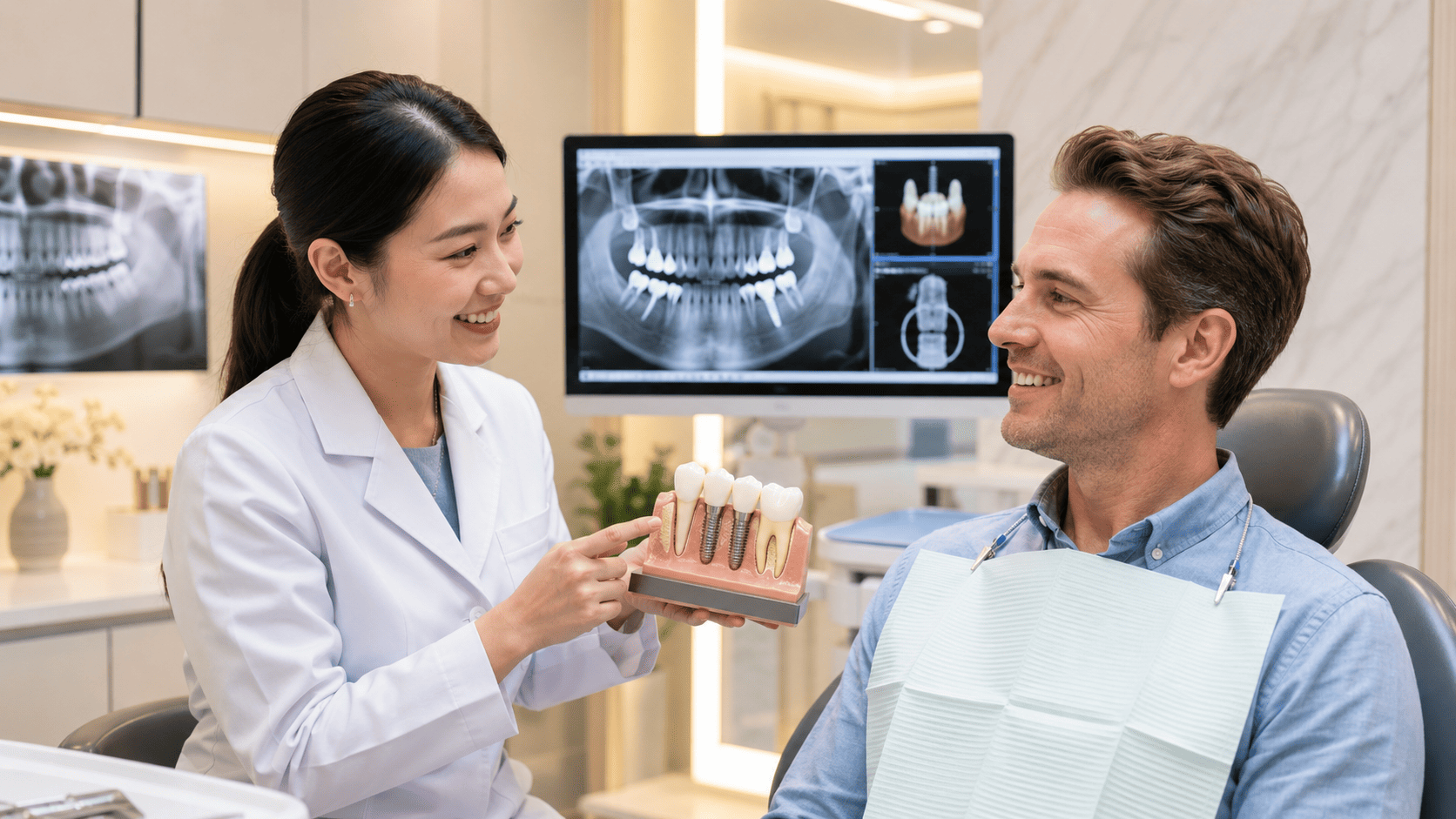
During placement, the implant is inserted into a precisely prepared channel in the jawbone, and the fit between the implant threads and the bone walls provides primary stability right away. A blood clot forms around the implant within hours, and an early inflammatory response begins as healing gets underway. Because the implant is not yet biologically anchored, it needs to be protected from excessive movement and premature loading.
Depending on the surgical approach, the dentist either attaches a healing abutment that sits slightly above the gum (a one-stage approach) or places a cover screw and closes the gum over the implant (a two-stage approach) to be uncovered later. Some swelling, mild bleeding, soreness, and bruising are common and expected in the first 24 to 72 hours.
Days 1 to 7: Early Soft-Tissue Healing
Over the first week, the blood clot organizes and the surrounding gum begins to close over or around the implant. Immune cells clear damaged tissue and begin the repair process, which is why gum soreness and swelling usually settle noticeably faster than the slower bone healing underneath. Patients are generally advised to eat soft foods, keep the surgical site undisturbed, and avoid smoking, since tobacco reduces blood flow and healing at the wound.
Swelling and soreness should gradually ease through the week rather than build. If discomfort trends the wrong way, that is a reason to call the dental team rather than wait it out.
Weeks 2 to 4: Early Bone Formation
Between roughly two and four weeks, new blood vessels grow into the site and early, immature bone begins to form, marking the start of true biological attachment. During this window, a well-documented stability dip can occur: mechanical stability decreases as the first bone-to-implant contact is remodeled, while biological stability has not yet fully caught up. Research using resonance frequency analysis has shown that implants placed with lower primary stability often gain stability during healing, while those placed with very high primary stability may show a temporary decrease.
The exact timing and depth of this dip vary between patients, implant sites, and bone quality, so it should not be treated as a fixed stage that happens on the same day for everyone. It is also one reason an implant can feel fine on the surface while still being vulnerable to excessive loading during this period.
Month 2: Building Biological Stability
By the second month, early healing tissue is progressively replaced with more mature bone, and biological stability continues to increase. Many patients feel completely normal at this stage, with no pain and a solid-feeling implant, yet integration is often still incomplete. Comfort reflects healing of nerves and soft tissue, not the completeness of the bone-to-implant bond, which is why a dentist may still advise waiting even when nothing hurts.
Around Month 3: A Common Reassessment Point
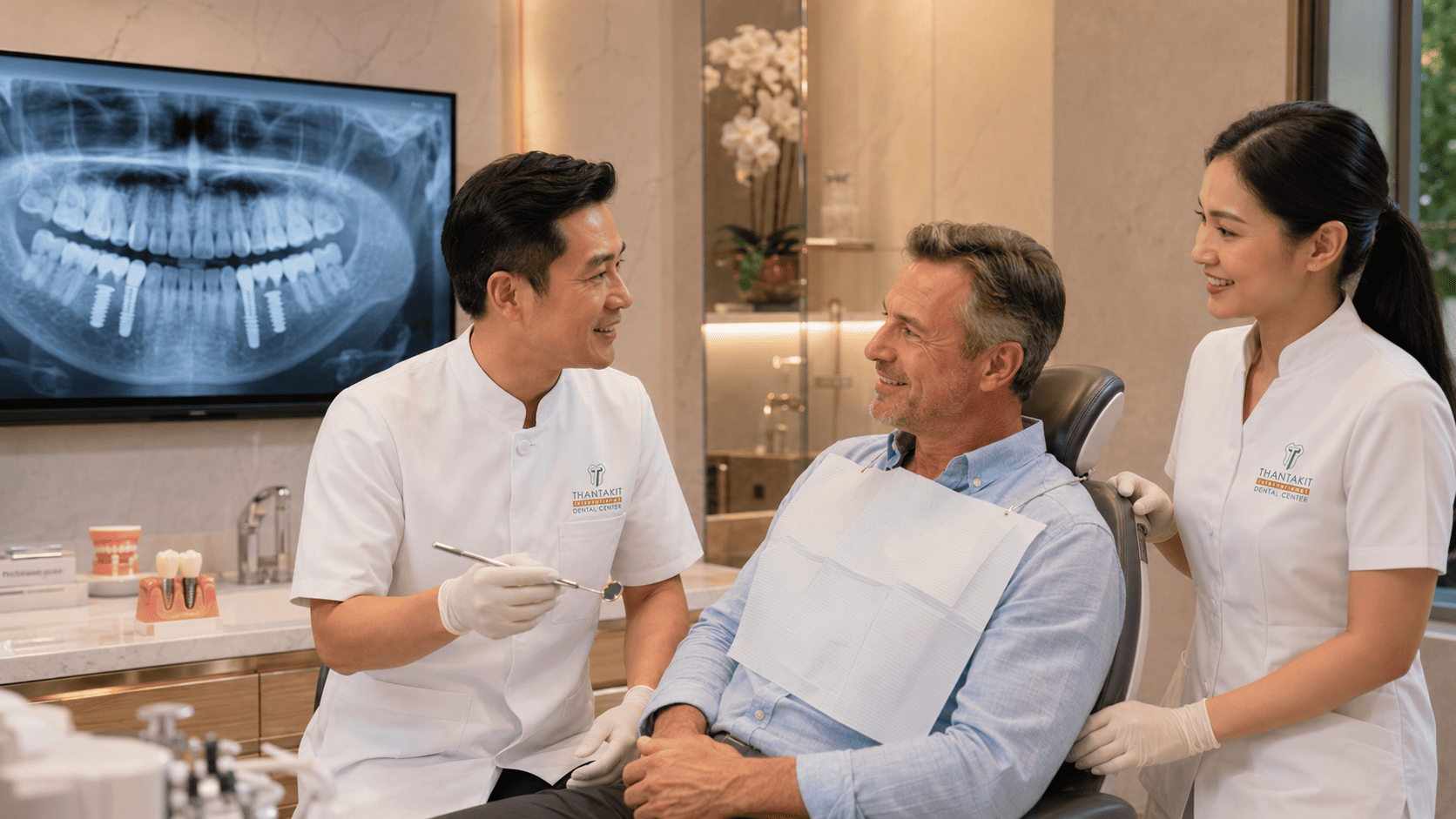
Three months has long served as a common point to reassess healing, tracing back to Brånemark’s original protocol of roughly three months for the lower jaw and six months for the upper jaw. That historical protocol is useful background, but modern treatment timing is individualized rather than tied to the calendar.
Lower-jaw (mandibular) bone is often denser than upper-jaw (maxillary) bone, which is one reason some lower-jaw implants reach adequate stability sooner. This is a tendency, not a rule: bone density varies widely within both jaws and between patients, so the site matters more than the jaw alone. At this stage, some implants are ready for restoration, while others need more time depending on bone quality, implant position, grafting, and individual healing.
Months 4 to 6: Extended Healing and Complex Cases
A longer healing period, often four to six months or more, is commonly appropriate for upper-jaw implants, soft or lower-density bone, grafted sites, sinus augmentation, larger defects, multiple implants, and full-arch treatment. With bone grafting and sinus augmentation, the sequence is not one-size-fits-all. Sometimes the graft is placed and allowed to mature before the implant goes in. Other times, the implant is placed at the same appointment as the graft or sinus lift. Which approach is chosen depends on the amount and quality of native bone, the primary stability that can be achieved, and the size of the graft, so there is no single fixed waiting period that applies to every case.
Reduced primary stability, smoking, and poorly controlled diabetes can also extend the healing window. A longer wait in these situations does not necessarily mean something has gone wrong. More often it reflects a cautious approach that gives the bone enough time to mature before it carries biting forces.
The Final Restoration Stage
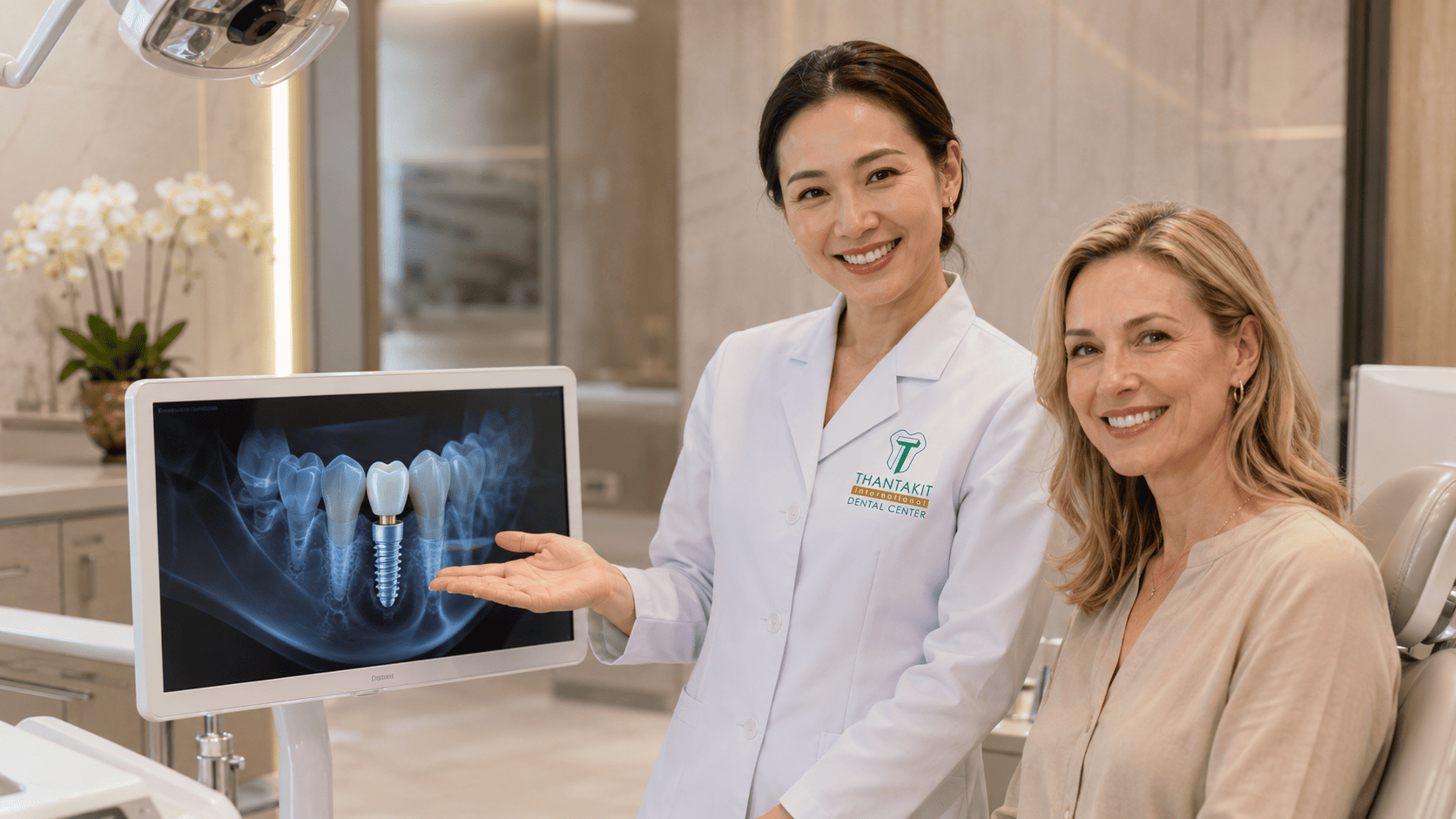
Once the dentist confirms adequate stability, treatment moves to the restoration. If a two-stage implant was used, the gum is reopened to expose the implant and a healing abutment is attached to shape the gum around the future crown. Digital scans or physical impressions are taken, an abutment (the connector piece) is selected, and the crown is made.
Not every patient receives a temporary crown first. A provisional restoration is often used in visible front-tooth cases, immediate-loading situations, or complex treatment where the gum needs shaping, while many other patients go straight to the final crown. The right sequence depends on the implant position, gum contour, treatment plan, and clinical conditions. The bite is then carefully adjusted so chewing forces are shared appropriately. Bone remodeling continues after the crown is fitted, even though sufficient osseointegration has already been achieved for the implant to be loaded.
Immediate Loading Versus Delayed Loading
Loading terminology follows internationally recognized definitions from consensus groups such as the International Team for Implantology. Immediate loading generally means a tooth is attached in occlusion (in contact with the opposing teeth) within about a week of placement. Early loading refers to attachment between roughly one week and two months. Conventional loading means a healing period of more than two months, historically stated as three to six months, before the prosthesis is attached.
There is a useful distinction within immediate treatment. Immediate provisionalization means a temporary tooth is fitted out of the bite, with no direct chewing contact, while immediate functional loading means the tooth has contact with the opposing teeth when biting. Receiving a tooth soon after surgery does not mean integration has already happened. It means the dentist judged that primary stability, bone quality, and implant position were favorable enough to support a restoration while biological healing continues underneath. Immediate loading is not inherently better than conventional healing. It is a different protocol suited to specific situations, and it is not appropriate for every patient or site.
Gum Healing Versus Bone Healing
Soft tissue and bone heal on very different timelines, and confusing the two is a common source of worry. Gums often close within a few weeks, with visible swelling and tenderness settling over that period. Bone integration is slower, generally taking several months to reach the maturity needed for reliable long-term function, and pain typically fades well before that process is complete.
How Dentists Assess Integration
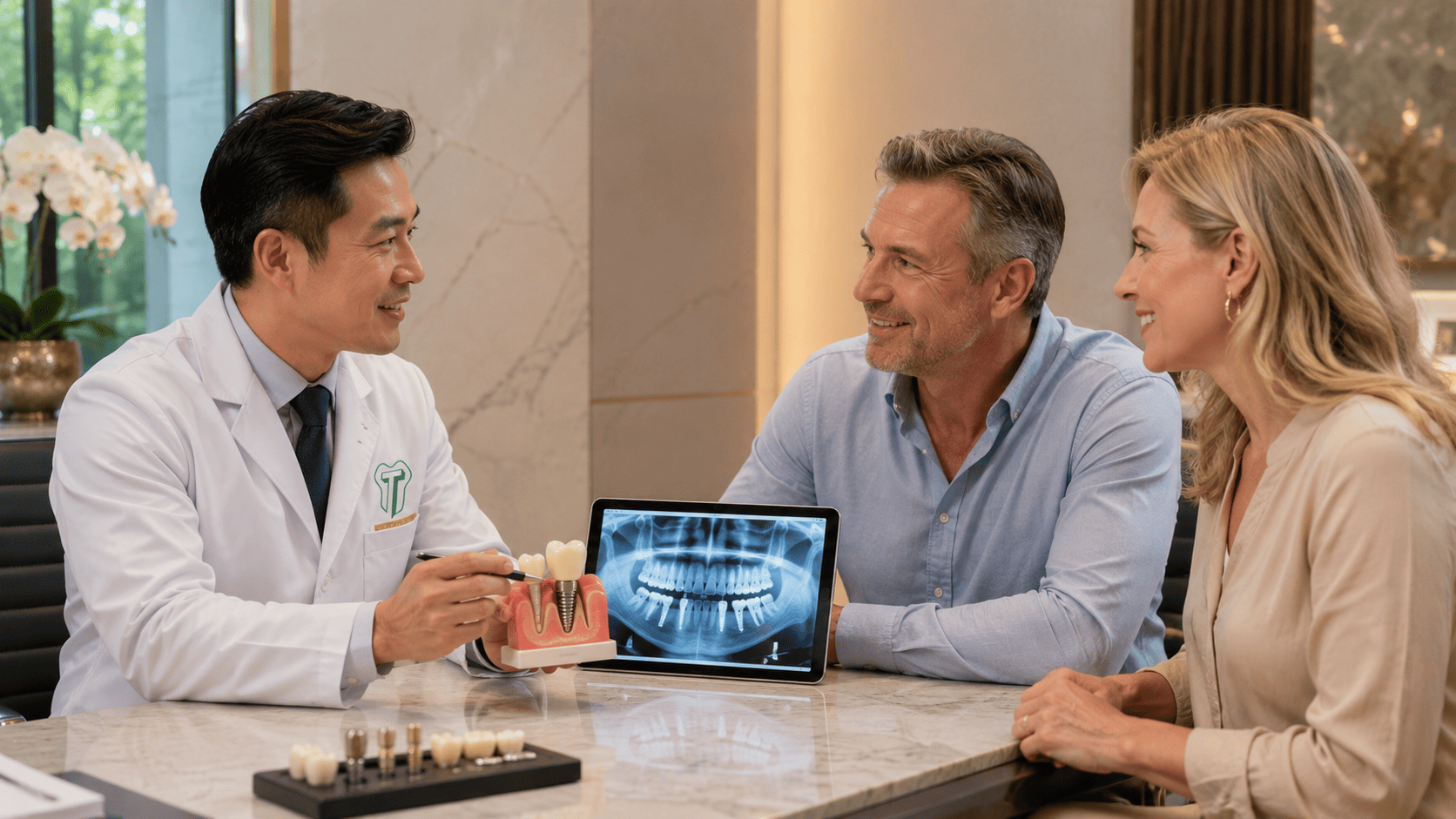
Dentists rely on a combination of signs rather than any single test. In practice, that usually includes checking for implant mobility, pain or tenderness, and the health of the surrounding gum, along with radiographs (dental x-rays) to look at the bone around the implant and a review of the insertion torque recorded at surgery. Where the equipment is available, resonance frequency analysis gives a numerical Implant Stability Quotient (ISQ) that some clinics use to track progress. No single sign on its own confirms that osseointegration is complete, which is why dentists rely on this combination of evidence rather than any one test.
Factors That Can Slow Osseointegration
Several factors are well documented as influencing the pace or success of healing:
- Smoking and nicotine, which reduce blood flow and are linked to meaningfully higher implant failure rates.
- Poorly controlled diabetes. Well-controlled diabetes can still allow predictable implant treatment, while poorly controlled blood sugar may slow healing and increase the risk of complications.
- Active infection and poor plaque control at or near the implant site.
- Low bone density, which is more common in the upper jaw and can extend healing time.
- Excessive early movement or loading during the vulnerable healing window.
- Bruxism (habitual teeth grinding), which places extra stress on a healing implant.
- Previous radiotherapy to the jaws, which is associated with lower implant survival, and certain medications that affect bone metabolism, immune response, or healing.
Osteoporosis and antiresorptive (bone-density) medications are sometimes raised as concerns, but the evidence is nuanced and osteoporosis does not automatically rule out implant treatment. It is one of several factors a dentist weighs during planning. The practical step for patients is not to stop any prescribed medication on their own, but to give the implant dentist and treating physician a complete, current medication and medical history so the plan can account for it.
Normal Healing Versus Warning Signs
Normal early symptoms
These usually ease gradually over the first one to two weeks:
- Mild swelling
- Bruising of the skin or gum
- Tenderness around the surgical site
- Minor bleeding or oozing
- A feeling of tightness around the stitches
- Temporary sensitivity in neighboring teeth
Signs that warrant prompt contact with your dentist
- Pain or swelling that worsens after initially improving
- Fever
- Pus, a persistent bad taste, or ongoing discharge
- Bleeding that will not stop
- Any looseness or movement of the implant or restoration
- Persistent or worsening numbness or altered sensation
- Increasing difficulty opening the mouth
- A significant opening of the wound
- Unexpected exposure of graft material
- A temporary restoration that feels loose or bites down too heavily
A single visible graft particle does not mean the treatment has failed, but any exposure is worth having assessed, so contact the treating dentist rather than guessing. It also helps to understand what these early symptoms are not. Peri-implantitis is a plaque-associated inflammatory condition that causes bone loss around an implant that has already integrated, and it usually develops later, after the implant is restored and in function. It is not the standard explanation for symptoms in the first few weeks after surgery, which more often relate to postoperative infection, excessive micromovement, surgical trauma, or an implant that has not integrated. Because peri-implantitis can progress quietly once an implant is in use, ongoing professional check-ups matter for the long term.
Travel During Osseointegration
Many international patients can travel home during the healing phase, but the right timing depends on the individual case rather than a single universal rule. Factors include whether the procedure was a straightforward implant, a bone graft, or a sinus lift, the extent of surgery, the amount of bleeding and swelling, whether the sinus was involved, whether an early postoperative review is needed, your medical history, and how easily you can reach follow-up care after returning home.
Published recommendations vary, and no fixed flight deadline fits every case. Straightforward single implants without grafting may allow travel relatively soon, while sinus lifts and extensive grafting often call for a longer wait. Whenever the itinerary allows, plan to complete your initial postoperative review before departing, and treat your surgeon’s specific instructions as the deciding factor.
Supporting Successful Healingn
A few practical steps help healing stay on track:
- Take antibiotics, pain medication, and any other prescribed treatments exactly as directed. Not every implant patient is prescribed antibiotics, so follow the specific instructions you were given.
- Keep the surgical area clean as directed by the dental team, and use any antimicrobial rinse only as often as instructed.
- Avoid smoking and nicotine products throughout healing.
- Eat a soft diet in the early phase and reintroduce normal foods gradually.
- Avoid chewing directly on the implant site, and resist the urge to press, wiggle, or bite down to test it, since this can disturb early bone formation.
- Keep all follow-up appointments so healing can be monitored.
- Manage diabetes and other relevant conditions with your physician, and wear a night guard if grinding is a concern and one is recommended.
Frequently Asked Questions
How long does dental implant osseointegration take?
It varies by patient and site, but many implants reach adequate stability for restoration somewhere between roughly two and six months, with lower-jaw implants sometimes ready sooner than upper-jaw implants.
Can a dental implant fail during healing?
Yes. Infection, excessive early loading, smoking, and poorly controlled diabetes can all interfere with integration and, in some cases, lead to failure.
How can I tell whether my implant is healing normally?
Gradually improving comfort, healthy-looking gum, and no increasing pain or looseness are reassuring, but only a dentist’s clinical and radiographic assessment can confirm true integration.
Can I chew on the implant while it heals?
Generally not directly on the implant site, especially in the early weeks, since excessive early loading can disrupt the developing bond between bone and implant.
Do upper-jaw implants take longer to heal?
Often, because upper-jaw bone tends to be less dense than lower-jaw bone. This is a general tendency rather than a fixed rule, since density varies by person and by exact location.
Does bone grafting extend the treatment timeline?
It can. Depending on the case, the graft may need time to mature before the implant is placed, or the implant may be placed at the same time. The added time depends on the size and location of the graft and the surgeon’s plan.
Can I receive a temporary tooth immediately?
Sometimes, if primary stability, bone quality, and bite forces are favorable. Immediate loading is not suitable for every patient or site, and a temporary tooth does not mean integration is already complete.
Is it normal to have little or no pain?
Yes. Many patients have little pain, but comfort alone does not confirm that healing is complete.
What happens if an implant does not integrate?
The implant may need to be removed and the site allowed to heal, with re-treatment considered later, sometimes alongside additional bone grafting.
Can I fly home during osseointegration?
Often yes for straightforward cases, though sinus lifts, extensive grafting, or ongoing swelling and bleeding may call for a longer wait. Your treating dentist’s individual advice should guide the decision.
Moving Forward with a Personalized Plan
Every implant case has its own biology, timeline, and set of risk factors, and no article can replace a hands-on evaluation. A sound treatment plan accounts for bone quality, medical history, implant position, any grafting that is needed, and your travel plans, then sets realistic expectations for each stage of healing.
If you are considering implants and want a timeline suited to your situation, the team at Thantakit International Dental Center in Bangkok can assess your case directly and outline a personalized healing and restoration plan. Contact Thantakit to arrange an implant consultation.